Enterprise GPU Servers: The Backbone of High Performance AI and Business Computing

Artificial intelligence, machine learning, data analytics, and high performance computing have become essential drivers of innovation across modern industries. Organizations are processing larger datasets, training increasingly sophisticated AI models, and running computationally intensive applications that traditional server infrastructure often struggles to support. As a result, enterprise GPU servers have become a critical investment for businesses seeking faster performance, improved scalability, and long-term competitive advantage.
Unlike conventional servers that rely primarily on CPUs, enterprise GPU servers leverage the parallel processing capabilities of Graphics Processing Units (GPUs) to accelerate demanding workloads. Whether powering generative AI, scientific research, financial modeling, computer vision, or cloud-based services, these systems deliver the computing power required for today’s data-driven economy.
This article explores what enterprise GPU servers are, their key components, business benefits, industry applications, deployment strategies, and why they have become the foundation of modern enterprise infrastructure.
What Are Enterprise GPU Servers?
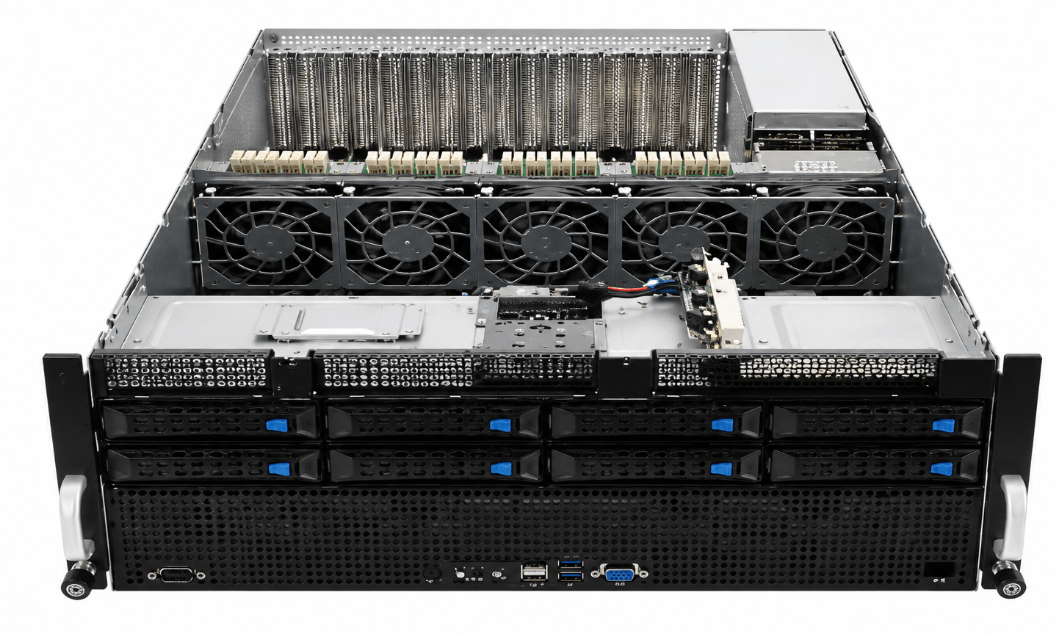
Enterprise GPU servers are high-performance computing systems designed specifically for organizations that require accelerated processing for artificial intelligence, machine learning, deep learning, simulation, rendering, and data-intensive workloads.
Unlike desktop workstations or consumer-grade GPU systems, enterprise GPU servers are built for continuous operation in professional environments such as data centers, research facilities, healthcare institutions, and cloud computing platforms.
These servers combine powerful CPUs with one or more enterprise-grade GPUs, high-capacity memory, fast storage, advanced networking, and enterprise-level management capabilities.
Common workloads supported by enterprise GPU servers include:
- Artificial intelligence
- Machine learning
- Deep learning
- Natural language processing
- Computer vision
- Scientific computing
- Financial analytics
- Virtual desktop infrastructure (VDI)
- Video rendering
- Data analytics
Their ability to execute thousands of calculations simultaneously makes them indispensable for organizations handling complex computational tasks.
Why Modern Businesses Need Enterprise GPU Servers
The rapid growth of AI applications has significantly increased computing requirements across industries.
Traditional CPU-based servers are designed for sequential processing. While effective for many business applications, they are not optimized for the highly parallel mathematical operations required by machine learning and AI.
Enterprise GPU servers solve this challenge by allowing thousands of processing cores to work simultaneously.
This delivers several advantages:
- Faster AI model training
- Lower processing times
- Improved productivity
- Reduced infrastructure bottlenecks
- Greater scalability
- Better resource utilization
Organizations can analyze larger datasets, experiment with more sophisticated AI models, and deploy intelligent applications much faster.
How Enterprise GPU Servers Work
GPU servers distribute computational workloads across many processing cores rather than relying on a limited number of CPU cores.
For example, training a deep learning model involves millions or even billions of matrix calculations.
Instead of performing these operations one after another, GPUs execute thousands simultaneously.
This architecture dramatically accelerates:
- Neural network training
- Image recognition
- Predictive analytics
- Recommendation engines
- Speech recognition
- Video processing
- Scientific simulations
The result is significantly reduced processing time and improved operational efficiency.
Core Components of Enterprise GPU Servers
Understanding the architecture of enterprise GPU servers helps organizations select systems that meet their workload requirements.
Enterprise GPUs
The GPU is the primary accelerator within the server.
Enterprise GPUs provide:
- Thousands of processing cores
- Tensor acceleration
- Large memory capacity
- High memory bandwidth
- Error correction capabilities
- AI optimization
Many enterprise servers support multiple GPUs working together for even greater computational power.
High Performance CPUs
Although GPUs perform parallel computations, CPUs remain responsible for:
- Operating system management
- Storage operations
- Network communication
- Application coordination
- Data preprocessing
Balanced CPU performance ensures maximum GPU utilization.
High Capacity Memory
AI models often require large amounts of system memory.
Enterprise GPU servers include substantial RAM to handle:
- Massive datasets
- Complex simulations
- Virtual machines
- Data preprocessing
Large memory capacity minimizes bottlenecks during computation.
NVMe Storage
Fast storage improves application responsiveness.
Enterprise systems typically include NVMe SSDs that provide:
- High throughput
- Low latency
- Fast data loading
- Rapid model access
Efficient storage keeps GPUs supplied with data.
Advanced Networking
Organizations frequently connect multiple enterprise GPU servers into clusters.
High-speed networking supports:
- Distributed AI training
- High performance computing
- Shared storage
- Multi-node rendering
- Large-scale analytics
Reliable networking becomes increasingly important as infrastructure grows.
Enterprise Cooling
GPU-intensive workloads generate significant heat.
Enterprise servers include sophisticated cooling systems such as:
- High airflow chassis
- Intelligent fan control
- Thermal sensors
- Liquid cooling for high-density deployments
Proper thermal management protects hardware while maintaining consistent performance.
Benefits of Enterprise GPU Servers
Businesses continue adopting enterprise GPU servers because they deliver measurable improvements across numerous workloads.
Accelerated Artificial Intelligence
AI development requires enormous computational resources.
GPU acceleration enables faster:
- Model training
- Fine-tuning
- Inference
- Testing
- Deployment
Organizations can bring AI-powered products to market more quickly.
Improved Business Productivity
Reduced computation times allow engineers, researchers, and developers to complete projects faster.
Teams spend less time waiting for results and more time improving applications.
Enterprise Scalability
Enterprise GPU servers support future expansion.
Organizations can:
- Add more GPUs
- Expand storage
- Increase memory
- Connect additional servers
Scalable infrastructure supports long-term business growth.
Centralized Infrastructure
Rather than maintaining numerous standalone workstations, organizations can centralize GPU resources within secure data centers.
Benefits include:
- Easier management
- Better security
- Simplified maintenance
- Improved resource sharing
Higher Reliability
Enterprise systems are designed for continuous operation.
Typical reliability features include:
- Redundant power supplies
- ECC memory
- Hardware monitoring
- Remote management
- Hot-swappable components
These capabilities minimize downtime and improve operational continuity.
See also: Efficient Switch Gear Products for Electrical Infrastructure Projects
Applications of Enterprise GPU Servers
Enterprise GPU servers support a wide range of business and research applications.
Artificial Intelligence
Organizations developing AI solutions rely heavily on GPU acceleration.
Applications include:
- Chatbots
- Predictive analytics
- Recommendation systems
- Intelligent automation
- Customer support AI
GPU infrastructure significantly reduces AI development timelines.
Machine Learning
Machine learning workloads involve repeated mathematical computations.
Enterprise GPU servers accelerate:
- Classification
- Regression
- Clustering
- Reinforcement learning
- Model optimization
Faster experimentation leads to better-performing models.
Deep Learning
Modern neural networks often contain billions of parameters.
GPU servers dramatically reduce training times while enabling more sophisticated model architectures.
Computer Vision
Computer vision solutions process enormous numbers of images and video streams.
Applications include:
- Medical diagnostics
- Security surveillance
- Autonomous vehicles
- Industrial inspection
- Retail analytics
GPU servers enable near real-time processing.
Natural Language Processing
Large language models require extensive computational resources.
Enterprise GPU servers accelerate:
- Machine translation
- Text summarization
- Sentiment analysis
- Document classification
- Conversational AI
Businesses can deploy intelligent language applications with lower latency.
Scientific Computing
Researchers use GPU servers for:
- Climate simulations
- Drug discovery
- Molecular modeling
- Physics research
- Engineering simulations
Accelerated computing shortens research cycles and improves productivity.
Industries That Use Enterprise GPU Servers
The versatility of enterprise GPU servers makes them valuable across many sectors.
Healthcare
Healthcare organizations use GPU infrastructure for:
- Medical image analysis
- Disease prediction
- Personalized medicine
- Drug development
- Clinical research
AI-powered diagnostics improve patient outcomes.
Financial Services
Banks and financial institutions deploy GPU servers for:
- Fraud detection
- Credit risk analysis
- Algorithmic trading
- Portfolio optimization
- Regulatory compliance
Real-time analytics improve both security and operational efficiency.
Manufacturing
Manufacturers leverage GPU computing for:
- Predictive maintenance
- Robotics
- Quality control
- Production optimization
- Supply chain forecasting
Accelerated AI supports smarter industrial operations.
Automotive
Automotive companies rely on enterprise GPU servers to develop:
- Autonomous driving
- Sensor fusion
- Computer vision
- Vehicle simulations
- Advanced driver assistance systems
GPU acceleration enables rapid innovation.
Education and Research
Universities and research institutions utilize GPU servers for:
- AI education
- Scientific research
- Engineering projects
- Data science
- Computational biology
Centralized GPU infrastructure allows researchers to share expensive computing resources.
Enterprise GPU Servers Versus Traditional Servers
The differences between enterprise GPU servers and conventional servers are significant.
| Feature | Traditional Server | Enterprise GPU Servers |
| Processing Method | Sequential | Parallel |
| AI Performance | Limited | Excellent |
| Machine Learning | Moderate | Optimized |
| Large Dataset Processing | Slower | Much Faster |
| Scientific Computing | Limited | High Performance |
| Scalability | Good | Excellent |
Organizations focused on AI, analytics, and research typically achieve far greater efficiency using GPU-powered infrastructure.
On Premises Versus Cloud Enterprise GPU Servers
Businesses often evaluate whether to purchase hardware or use cloud services.
Cloud GPU Infrastructure
Advantages include:
- Rapid deployment
- Flexible resource allocation
- Lower upfront costs
- Managed services
- Global accessibility
Cloud environments are suitable for temporary workloads and development projects.
On Premises Enterprise GPU Servers
Benefits include:
- Complete hardware control
- Enhanced data privacy
- Predictable long-term costs
- Regulatory compliance
- Lower latency
- Dedicated computing resources
Many enterprises combine both approaches through hybrid infrastructure.
Best Practices for Deploying Enterprise GPU Servers
Proper planning maximizes infrastructure performance.
Understand Business Requirements
Identify expected workloads before selecting hardware.
Consider:
- AI training
- AI inference
- Data analytics
- Scientific simulations
- Virtualization
- Rendering
Matching hardware to workloads improves return on investment.
Plan for Future Expansion
AI infrastructure requirements continue growing.
Choose systems that support:
- Additional GPUs
- Larger memory
- Storage expansion
- Faster networking
Future-ready infrastructure protects long-term investments.
Optimize Cooling
GPU servers generate substantial heat.
Organizations should implement:
- Proper rack spacing
- Efficient airflow
- Environmental monitoring
- Routine maintenance
Effective cooling improves reliability.
Monitor Infrastructure
Continuous monitoring helps identify:
- GPU utilization
- CPU performance
- Memory usage
- Storage throughput
- Thermal conditions
Performance monitoring enables proactive optimization.
Strengthen Security
Enterprise GPU servers often process sensitive information.
Security best practices include:
- Multi-factor authentication
- Encryption
- Role-based access control
- Network segmentation
- Regular updates
Comprehensive security protects valuable organizational data.
Challenges Associated with Enterprise GPU Servers
Although enterprise GPU servers provide exceptional capabilities, organizations should consider several operational challenges.
Initial Capital Investment
Enterprise GPU hardware represents a significant investment.
However, productivity gains and reduced processing times often justify the expense over the system’s lifecycle.
Energy Consumption
GPU-intensive computing requires more electricity than traditional servers.
Organizations should evaluate:
- Power infrastructure
- Cooling capacity
- Energy efficiency
- Data center readiness
Technical Expertise
Deploying and maintaining GPU infrastructure requires specialized skills.
Experienced IT teams help maximize performance while minimizing operational risks.
Software Compatibility
Applications should be optimized to utilize GPU acceleration effectively.
Keeping drivers, frameworks, and software updated ensures maximum compatibility.
Emerging Trends in Enterprise GPU Servers
The enterprise GPU market continues evolving rapidly.
Larger AI Models
Foundation models continue increasing in complexity.
Future enterprise GPU servers will support greater memory capacity and faster interconnect technologies.
AI Optimized Hardware
Manufacturers continue developing specialized hardware designed specifically for AI training and inference.
Energy Efficient Computing
New GPU architectures focus on delivering greater computational performance while reducing power consumption.
Edge AI
Organizations increasingly deploy GPU infrastructure closer to data sources.
Edge computing reduces latency for:
- Smart factories
- Retail analytics
- Healthcare
- Telecommunications
- Autonomous systems
Intelligent Infrastructure Management
AI-powered monitoring tools automatically optimize workload scheduling, thermal management, and resource allocation.
These innovations improve overall infrastructure efficiency.
Choosing the Right Enterprise GPU Servers
Selecting the right solution depends on several factors.
Organizations should evaluate:
- Number of GPUs required
- Workload complexity
- Available budget
- Rack space
- Cooling infrastructure
- Storage capacity
- Networking requirements
- Future scalability
Working with experienced infrastructure providers helps ensure that investments align with both current business objectives and long-term growth strategies.
Conclusion
As organizations continue embracing artificial intelligence, machine learning, advanced analytics, and high performance computing, enterprise GPU servers have become an essential component of modern IT infrastructure. Their ability to accelerate complex workloads, support scalable deployments, and deliver reliable performance enables businesses to innovate faster, improve operational efficiency, and gain a competitive edge. Whether deployed in research institutions, healthcare organizations, financial services, manufacturing facilities, or enterprise data centers, these powerful systems provide the computational foundation needed for the next generation of intelligent applications. Investing in the right enterprise GPU servers today prepares organizations for tomorrow’s rapidly evolving technology landscape. For expert guidance on selecting the ideal solution for your business, contact us.